The FREE video below is a section of a seminar lecture given by an instructor.
Below
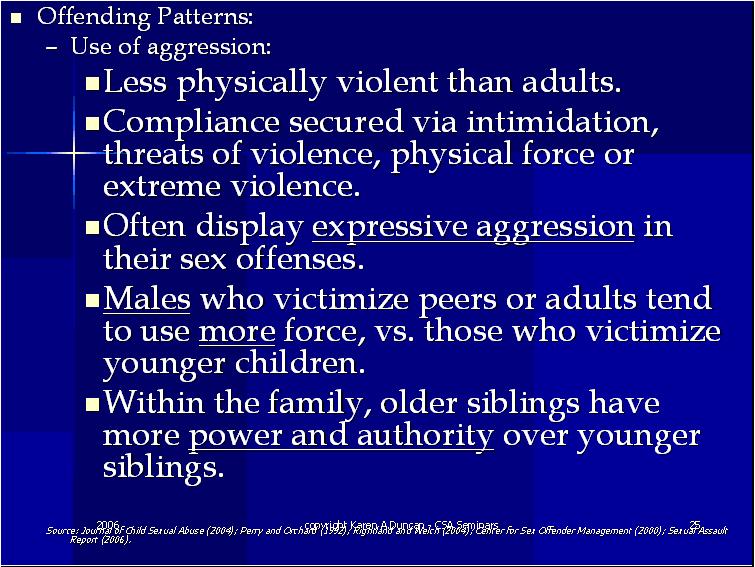
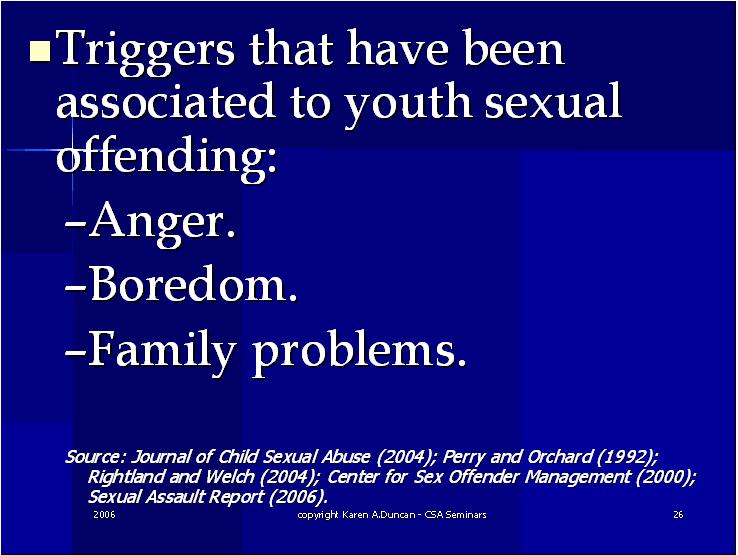
are the PowerPoints that accompany the instructor's lecture for this track. Question 6 found at the bottom of this page.
Reviewed 2023
Peer-Reviewed Journal Article References:
Barra, S., Bessler, C., Landolt, M. A., & Aebi, M. (2018). Testing the validity of criminal risk assessment tools in sexually abusive youth.Psychological Assessment, 30(11), 1430–1443.
Kang, T., Eno Louden, J., Ricks, E. P., & Jones, R. L. (2015). Aggression, substance use disorder, and presence of a prior suicide attempt among juvenile offenders with subclinical depression.Law and Human Behavior, 39(6), 593–601.
Matlasz, T. M., Frick, P. J., Robertson, E. L., Ray, J. V., Thornton, L. C., Wall Myers, T. D., Steinberg, L., & Cauffman, E. (2020). Does self-report of aggression after first arrest predict future offending and do the forms and functions of aggression matter?Psychological Assessment, 32(3), 265–276.
Wylie, L. E., & Rufino, K. A. (2018). The impact of victimization and mental health symptoms on recidivism for early system-involved juvenile offenders.Law and Human Behavior, 42(6), 558–569.
QUESTION
6 What kind of abuse is more likely to cause a youth to be sexually abusive?
To select and enter your answer go to CEU Test