The FREE video below is a section of a seminar lecture given by an instructor.
Below
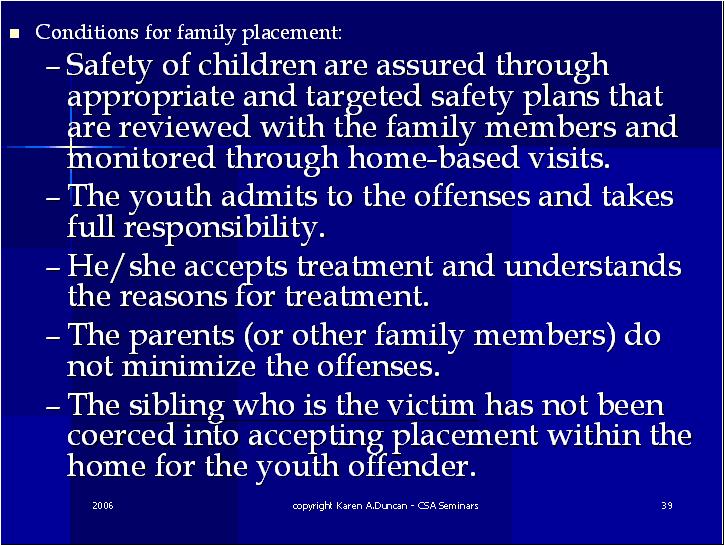
are the PowerPoints that accompany the instructor's lecture for this track. Question 12 found at the bottom of this page.
Reviewed 2023
Peer-Reviewed Journal Article References:
Assink, M., van der Put, C. E., Meeuwsen, M. W. C. M., de Jong, N. M., Oort, F. J., Stams, G. J. J. M., & Hoeve, M. (2019). Risk factors for child sexual abuse victimization: A meta-analytic review.Psychological Bulletin, 145(5), 459–489.
Barra, S., Bessler, C., Landolt, M. A., & Aebi, M. (2018). Testing the validity of criminal risk assessment tools in sexually abusive youth.Psychological Assessment, 30(11), 1430–1443.
Cleveland, K. C., & Quas, J. A. (2018). Parents’ understanding of the juvenile dependency system.Psychology, Public Policy, and Law, 24(4), 459–473.
DeCou, C. R., Cole, T. T., Lynch, S. M., Wong, M. M., & Matthews, K. C. (2017). Assault-related shame mediates the association between negative social reactions to disclosure of sexual assault and psychological distress.Psychological Trauma: Theory, Research, Practice, and Policy, 9(2), 166–172.
Hamilton, E. (2017). Identity concerns among sexual offenders: The narrative call.Practice Innovations, 2(1), 13–20.
Thompson, R. W., Ringle, J. L., Way, M., Peterson, J., & Huefner, J. C. (2010). Aftercare for a cognitive-behavioral program for juvenile offenders: A pilot investigation.The Journal of Behavior Analysis of Offender and Victim Treatment and Prevention, 2(3), 198–213.
QUESTION
12 What is one result of the family feeling shame and embarrassment and
wanting to hide what is happening from friends, family, and neighbors? To select
and enter your answer go to CEU Test